Some of the most repeated nail care advice isn't backed by how nails actually grow or how polish actually bonds, it's just advice that sounded reasonable enough to spread. A few of these myths are harmless but pointless; others actively work against healthier, longer-lasting manicures. Here are five of the most common ones, what's actually true, and what to do instead.
Myth: Nails Need to 'Breathe' Between Manicures
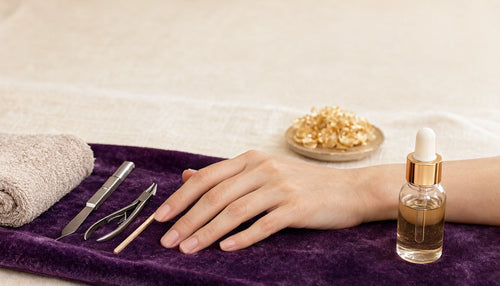
Nails are made of keratin, a dead protein structure with no respiratory function, which means the popular idea of giving nails a 'breathing break' between polish applications has no basis in how nail biology actually works. What can genuinely happen with back-to-back polish applications is a buildup of dryness or discoloration from repeated exposure to acetone and other chemicals, but that's a moisture and product-residue issue, not an oxygen issue. If you want to protect nail health between manicures, the more useful habit is applying cuticle oil daily and giving nails a break from harsh acetone removal specifically, rather than leaving them bare for the sake of 'breathing.' Continuous polish wear with good prep and gentle removal doesn't harm healthy nails.

Myth: Cutting Your Cuticles Is Good Grooming
Cuticles serve a real protective function, sealing the area where your nail plate meets the skin and blocking bacteria and fungi from getting underneath. Cutting live cuticle tissue, rather than gently pushing it back, removes that seal and creates small entry points for infection, which is why aggressive cuticle cutting is a common cause of painful, swollen fingers days after a manicure. The safer approach is to soften cuticles with oil or a warm soak, then gently push them back with a cuticle pusher rather than cutting them away entirely. Trimming is appropriate only for the small strip of dead, hangnail-type skin that sometimes forms at the edge, not the healthy cuticle tissue itself.

Myth: Biotin Supplements Make Nails Grow Faster
Biotin supplements are heavily marketed for nail growth, but the research supporting this claim is thin and mostly limited to people who already had a biotin deficiency, which is genuinely rare in typical diets. For someone without a deficiency, taking additional biotin is unlikely to speed up growth or meaningfully improve strength, since the nail growth rate is primarily determined by genetics and overall health rather than any single vitamin. Nails that are actually brittle or slow-growing are more often affected by frequent acetone exposure, dehydration, or repeated trauma from daily activities than by a nutritional gap. If you suspect a genuine deficiency, a blood test rather than a supplement bottle is the more reliable way to confirm it.

Myth: White Spots Mean You're Calcium Deficient
Those small white spots that sometimes appear on nails, known as leukonychia, are almost always caused by minor trauma to the nail matrix, a bump, a slammed drawer, aggressive filing, rather than any nutritional deficiency. The spot appears weeks after the injury because it takes that long for the affected nail cells to grow out to a visible point, which is part of why people rarely connect the spot to an actual cause. True mineral deficiencies affecting nails are uncommon and typically come with other, more obvious symptoms beyond isolated white spots. If white spots are a frequent, ongoing pattern rather than an occasional one, it's worth mentioning to a doctor, but a single spot here and there is a cosmetic, not medical, non-issue.

Myth: Gel Polish Permanently Weakens Your Nails
Gel polish itself doesn't weaken nails, improper removal does. Gel that's peeled or picked off, rather than properly soaked in acetone, takes layers of the natural nail plate with it, which is where the 'gel ruins your nails' reputation actually comes from. Nails that are always kept under back-to-back gel sets without any prep breaks can also become temporarily thin and flexible-feeling, but this is usually reversible within a few weeks of proper aftercare once you stop stacking sets continuously. The actual damage risk lives almost entirely in removal technique, not in the polish itself, which means the fix is patience with acetone soaking rather than avoiding gel altogether. Nails recovering from a rough removal also benefit from a short break under a ridge-filling base coat rather than jumping straight into another full gel set.

Myth: You Should File Nails in One Direction Only
The 'file in one direction only' rule gets repeated often, but the real concern isn't direction, it's friction heat and pressure. Back-and-forth sawing motions with a coarse file can generate enough heat and mechanical stress to cause splitting and peeling at the layers of the nail plate, regardless of whether you're moving the file left-right or in a single direction. What actually matters is using light pressure and a fine-enough grit for your nail's current condition, letting the file do the work gradually rather than trying to shape a nail in a few aggressive strokes. A gentle, patient filing technique protects nail integrity far more than direction alone ever could.

Myth: Thicker Base Coat Means Longer-Lasting Polish
Applying a thick layer of base coat feels like it should create a stronger foundation, but the opposite is usually true, thick base coat takes longer to fully cure or dry, and an incompletely set base is a weaker bond point for everything applied on top of it. A thin, even base coat that cures or dries completely provides a more reliable foundation than a thick one that's still slightly soft underneath a finished-looking top layer. This mirrors the same principle that applies to gel top coats: thinner, fully-cured layers consistently outlast thicker ones that only look done on the surface. Even simple substitutions, like switching to a moisturizing hand soap or keeping a small bottle of oil at your desk, add up over the two-week wear window.

What Actually Extends Nail Health and Wear Time
Cutting through the myths, the habits that genuinely support healthier, longer-lasting nails are simple and unglamorous: daily cuticle oil, gentle rather than aggressive filing, proper acetone soak-off removal instead of picking, and giving nails periodic breaks specifically from harsh chemical exposure rather than from 'breathing.' None of these require supplements, special diets, or elaborate routines, they're mostly about removing sources of repeated mechanical and chemical stress rather than adding anything new to your routine. Most of these habits take seconds to build into a routine you already have, and the payoff compounds over months rather than showing up after a single manicure. If you only change one thing after reading this, make it patience during removal, since that single habit prevents more long-term damage than any other item on this list.

Shop the products in this look:
Do nails really need to breathe between manicures?
No, nails are made of dead keratin with no respiratory function, so the idea of nails needing to 'breathe' isn't biologically accurate. What actually helps is limiting harsh acetone exposure and using cuticle oil regularly.